Showing posts with label Women's Worries Around 40. Show all posts

Thursday, 17 April 2014

whereabouts: Crimean Tatars' settlement

Crimean Tatars settlement in Koreiz, Crimea, May 2013

Of all the photos I have taken in the Ukraine during my stay in 2013, this photo is special. It matters to me. Over the weeks I had become familiar with this sight: A Crimean Tatar woman. Every evening she would stand at the corner of the street, burn her waste and watch it burn, stir around in the waste with a log. Burning waste, a ritual.

The corner is situated in the village where I stays, close to the coast. On my route home from the bus stop I would walk past this corner. All the days before I had not dared to take this photo. But this time – it was around the end of my stay – I did not pass by but and climbed down the small hill from the upper road and moved closer to the scene. My camera does not have a zoom, the zoom is in my legs.

During the Soviet area, the Crimean peninsula has served as a sanatorium where reupatble workers from all over the Soviet empire would spend their vacation. The Crimean peninsula was known for its pure air.When I planned my vacation, I was very looking forward to staying in a healthy environment surrounded by pure air, only to find myself in a toxic environment.

The evening we arrived in Kiev, we already noticed the fumes. To be precise: we noticed the fumes even before we had landed. You could see heavy fumes wandering around the outskirs of Kiev from the air. Fumes in colours we don't get to see in Austria. What we did not know back then, was that these fumes were resulting from fires in the woods, but from waste and that they would accompany us during our stay. Every single day. From dusk. Till dawn.


I would have to close my windows in the early morning hours as well in the evening. And in the afternoon. That's when the Crimean tatars' burnt their waste. All kinds of waste. Paper. Plastic. Wood. Plastic And more plastic. Having spent most of my life in Austria, I am not used to the fumes of burnt plastic. The fumes almost ruined my vacation. I turned into a Pavlovian dog: as soon as the fumes entered the room, I would rush to the windows and shut them.


My host repeatedly went across the street and told them to stop with the waste-burning. For years she had been trying to convince their neighbours to stop burning waste. She did it for two reasons: one, because she hated it and two, because she felt responsinble for my wellbeing. It was useless. The neighbours would not quit burning their waste.

Why would someone burn waste in the middle of the neighbourhood? You might think this photo is the direct response to a non-existent waste management. Which is not the case. Waste management exists. It is not the best around, but still better than, lets say, the waste management in Southern Italy. Russians, Ukrainians and Crimean Tatars live together on the Crimean pensinsula, door to door, but found only Crimean Tatars in the street, burning their waste.

I experience such a careless behaviour – in a slightly modified way – at home in Vienna. My neighbours. They open the door of their car just before they leave, so they can toss their litter. They leave and their garbage is spread in the street. And me? I watch this and cringe. Needless to say my moved to Vienna from a country in Southern Europe? Outch. I have enterted thin ice by now, asking questions like 'Why wouldn't they give up this behaviour?' Racism did not just knock on my door, it already took a seat, right next to me.

Monday, 31 March 2014

Why waste?

Hello!

I am back from the service station, it was tougher than I had expected. The problem was: the people who work there are professionals. They care about bicycles. They see how much or how little care you take and - they let you know. They dissaprove rusty chains and rust in general.

I fought for my reputation: "But there was the salt, you know, the salty snow, after 10 minutes the chain will be a rusty mess the next day."
I was hoping for some respect. How many people ride their bike in the snow? 
The problem is: that snow was like 5 weeks ago.

I asked, how much the new parts would cost in total. 400 EUR.

This calculation lead straight to the idea of a new bike = 650 EUR. Fully equipped, better components. 

The idea of a new bike sounds seducing. An old bike remains an old bike, no matter how many parts you replace. But it was not plan, I only wanted to repair the worn out and broken parts.
is this waste?
Buying a new bike is good for the company which produces bikes.
Buying a new bike is bad for the environment, because during the production process, the company uses a lot energy, the bike has to be shipped - probably with a truck - it comes with plastic wrapping etc.
Ok, ok, I do realise this sound radical.

What to do?
I stood there in the service station like a wet, showered cat: unhappy and without a plan.

I looked down at the broken pedal and decided to start with a quick fix:
new pedals, old bike
19 EUR later I was good to go. Not without the man at the service station complaining about the rust.

On my way home I came past these waste containers.

 
The old floors and the old doors in the waste containers somehow tell the story of my bike: one day  they in use, the next day they are waste, because someone you decides to go for something new. IYou can tell, I don't feel comfortable, turning goods into waste. Why waste? What is my responsibility?

It is irresponsible to ride a bike with worn out brakes, tires and a broken pedal. Replacing the pedals as a quick fix was the right thing to do. The brakes and tires will be replaced next week, for a fraction of the 400 EUR, far from the price for a new bike.

Some of the parts are "nice to have", they won't hazard me or others. The extended mudguard made of an empty mineral-water bottle plus scotch tape even serves as an icebreaker, because it looks so ridiculous. Ridiculous might be an appropriate label for this posting. ;-)

I might take this very seriously. Thinking about your own responsibilty is probably not the worst thing to do on a Sunday morning.  

Paula

PS: did you notice? Street photography arrived at the blog! The young man was ripping out the floor tiles of the apartment and I asked him, if it is ok to take a photo. I should do this more often, because it is fun.

Saturday, 15 March 2014

whereabouts: Crimea, 9 months ago

9 months ago, I travelled through a region of Europe, that is a blank area for many Austrians: the Ukraine. I knew nothing about the Ukraine before I went there. You might remember this blog entry: The Hat Ladies.

I picked a small language school not far from Yalta. Lena, my teacher lives in Simferopol. She and her aunt, who owns the school, both teach Russian, they speak Russian and yet .... they are committed Ukrainians. Everything I write here is based on my experiences during those four intense weeks. I am fully aware, that my impressions don't exeed the level of being lets say - sketchy. I am not in the position to understand how the recent politics function over there. Not in four weeks with language skills on the level of A1++. Still I want to explain some things. In case you find me writing false facts, please correct me!
The Ukrainian flag hanging on the balcony
Not far from the village the Crimean Tatars settle and build new villages. Crimean Tatars were deported to Uzbekistan under Stalin. In 1988, Michael Gorbatschow's politics made it possible for them to come back. They build new houses, because their old houses now belong to those, who moved in then the Tatars were deported. Over the years they new owners earned the right to stay in their houses.

To be accepted as a settlement, the newly built home has to be equipped with a chimney, a window and a roof. This explains all the shacks on the hills, even in the woods:
beginning of a new settlement in the woods
 Often the new settlements carry the name "Mikroregion" - Mikroregion-1, Mikroregion-2 etc
microregion-2 outside Bakhchisaray
Those microregions are located outside the villages. Sometimes a bus goes there, often the new residents walk up the hill to get to their homes. You don't hear about the microregions in the news. Hardly anyone reports about the Tatars. As you can see: there is a lot going on! The society is changing.
a more established settlement at the Black Sea coast.
Many Tatars sell the approved building lot and make profit
Every day during my stay, I did learn new things about the history and present of Crimea and the Ukraine. I watched, I listend (ok, I did not understand that much) and I learned. I also learned a lot about pigs. Human pigs.

If I know one thing, then it is this: people in Simferopol who speak Russian and don't automatically want to be a part of the Russian empire. Maybe that's why the referendum only offers to choices: Yes or Yes.
on the rooftop of Hotel Yalta in Yalta
The photo calender 2014, which my friends and parents received for Christmas, is well equipped with photos from Crimea. Today the same square, where I rested in front of the airport in Simferopol, while waiting for my delayed flight back to Kiev, is occupied by the military, violating national aw, because they are Russian.
the airfield in Simferopol, capital of Crimea
Retrospective I can not believe how lucky I was. Such a timing! Having been there just recently feels like a privilege. Those three weeks with Lena and her family as well as the one I spent with Mr Paula - doing a round-trip - they left so many imprints on my blank area. I hope for a future Ukraine, where I can go again, to continue to reduce the blank area.

Last year the trip from Vienna to Simferopol was complicated. But still, the connections from Kiev to Simferopol existed. Whereas today, there are not flights available going from Kiev to Simferopol.
airport mural in Kiev
heading South
Sevastopol in the far back
an ancient cemetary near Bakhchisaray
a "beach" in Sevastopol with a late USSR-monument in the fog.
Ukrainian banana
water that pretends to be beer
buying a ticket for the trolleybus
most of the trollybusses are conducted by women
while men drive the marschrutki, dreaming of fast cars
a businessmodell in Koreiz
pipes are a common sight in the woods
the pine trees around Ai-Petri after a fire
lunch at the "Old Fountain" in Koreiz
the market in Simferopol
sign at an amusement park. well ...
The Russian and the Ukrainian fleet, side by side
Sevastopol in the late afternoon
seamen in Sevastopol
a young peach in Valentina's garden
on top of the mountain Ai-Petri
at the "beach" in Alupka

"just do it"
Crimean family entertainment
 
cherries in Valentina's garden
Now, that I have put all these thoughts and images down here, I can return to Vienna, where I am at the moment. Vienna looks like this today:

Have a comfy weekend, I still got some Roman stories to tell, but not today.
Paula

Sunday, 9 February 2014

Bloody Iron!

When I went vegan, I planned to check my blood levels after lets say, the first year, so I could make sure the the diet does no harm to me. Every time someone approached me with praise – how wonderful it is, that I am a vegan (what did not happen very often as you can imagine) – my answer was "Wait until we see the blood results."

So here I am sitting with my new numbers from my first vegan blood result.

I had expected the cholesterol levels to improve over the 15 months, what they did. So the cholesterol did improve. Which is no surprise.

This little buddy lifts weights 10-times his own weight. Read below what his secret is.


But how about iron? Women before and after menopause get told to take extra care about the iron level.

Iron. As in red meat. And more meat. And even more meat. That's what the doctor's tell their patients: Eat more meat.

When I became vegan, I expected to develop a hunger for red meat. The hunger as an indictor, that I am missing something in my diet only meat can deliver.
Only that hunger never occured. I kept waiting ... nada.  


Another iron-aspect is related to milk. In school we hear how important milk is. It makes us strong. What most people don't know because no one educates us: milk actually limits the assimilation of iron. So with every glass of milk of scoop of cream or slice of cheese, you hinder your body to get the most out of the iron in your diet.


Sorry, cow. No milk for me. 

The healthy iron range (at least that the doctors say) is between 40 and 150.  Before becoming vegan, my iron was at a decent 66. Rather low, regarding the healthy range, but still healthy.

You can imagine my surprise and to a certain extent when I read the blood test result. My iron number did not just stay at the level where it was before, when I was an "omnivore", it  improved to impressive 99. Well, this might not impress you, since we are talking about my iron, which is really not the most impressive topic, but I can tell you, I AM impressed!

99 is excellent. Does it prove that those established opinions are wrong?
I would not go that far. What I do say though is, that this number proves how contraproductive the regular milk-intake is - iron-wise. Not just iron-wise, but for today I stick with the iron.
Ok, I've ruled out the disturbing milk. Only leaving out the milk alone won't do the job. 

To be able disturb any intake, you have to have an intake in the beginning. So where does my plant-based iron come from? I can assure you, there are other iron sources besides rusty pans.

The following friendly aliens supply me with iron. "Aliens", because I assume that most of you will not be all too familiar with those products:
Any lentil is good. Lentils de Puy deliver the best taste and stay al dente. No soaking required. 
Simply boil them as you would boil potatoes or noodles, just a little longer.
 Sesame. They add a nice flavour and make any salad complete. Plain or roasted, comme tu veux!
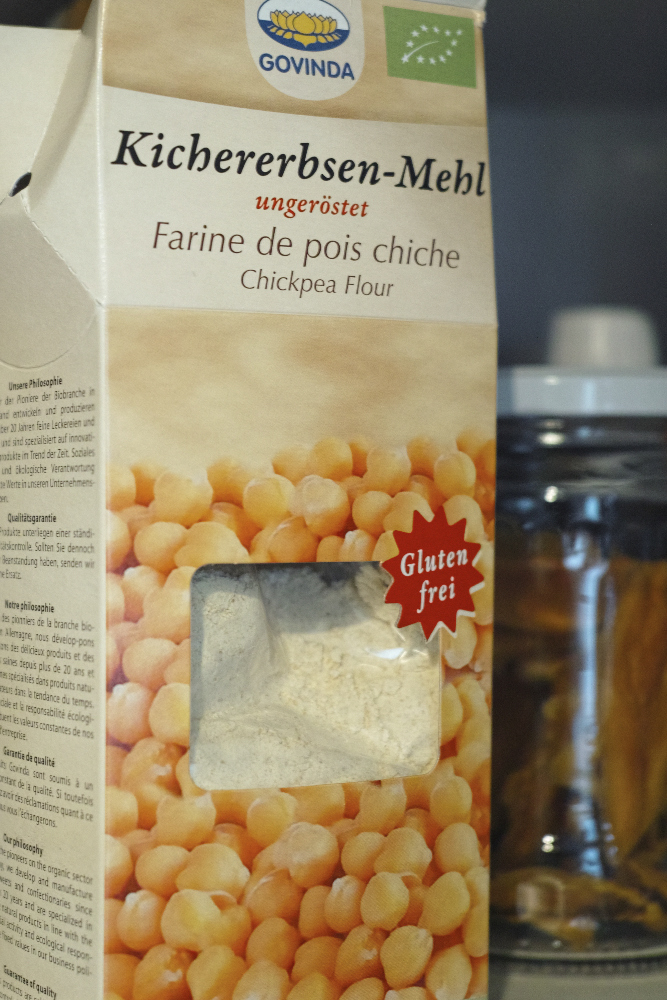
 Chickpea flour -mostly in form of a backup for fancy recipes. I don't really need it, but I keep using it.
 Canned lentils - the most backup'y a backup can get.
 Cashews above hummus. The hummus is made of chickpeas, sesame and olive oil.

Skeptics and doctors (the same? ;-)) point out, that the plant based iron is not as valuable as the iron that comes from animals, that the body can not absorb it properly. Non-heam and so ...
That's why I like convetional tests like the blood test. Looking down at those numbers any skecptic can not deny that plant based iron does the job.

A nice side effect is that all these iron sources also provide a decent amount of protein, in case you worry about my protein intake. ;-)

source: https://de-de.facebook.com/ThisVegansLife

Any questions?